
Credit Card Debt
Credit card debt is one of the most common financial problems facing consumers across the United States. With rising living costs, high interest rates, and unexpected expenses, many Americans rely on credit cards to manage daily needs. Unfortunately, what begins as a short-term solution can quickly turn into long-term financial stress.
High-interest credit cards make it difficult to pay down balances. Even when you make more than the minimum payment, a large portion often goes toward interest instead of reducing the principal.
Debt Relief Assessment
Answer a few quick questions — it only takes a minute
How Does It Work?
A simple, proven approach designed to help you move toward a debt-free future with confidence.
Experienced Professionals
Our team consists of seasoned experts who have successfully guided countless clients toward financial stability and long-term debt relief.
Customized Solutions
Every financial situation is unique. That’s why we craft personalized debt relief plans tailored specifically to your needs.
High Success Rate
Our proven strategies and dedicated approach help ensure tangible results and meaningful progress.
Confidential Consultation
Your privacy is paramount. Every consultation is handled with complete discretion and strict confidentiality.
How to Regain Control of Your Finances
Millions of Americans are currently struggling with multiple credit card accounts, late payments, and mounting interest charges. This financial pressure can affect more than just your budget — it can impact your mental health, family life, and long-term financial goals
Many people feel trapped, unsure of how to break free from credit card debt without taking on more loans or filing for Bankruptcy. Fortunately, credit card debt relief and debt consolidation options are available.
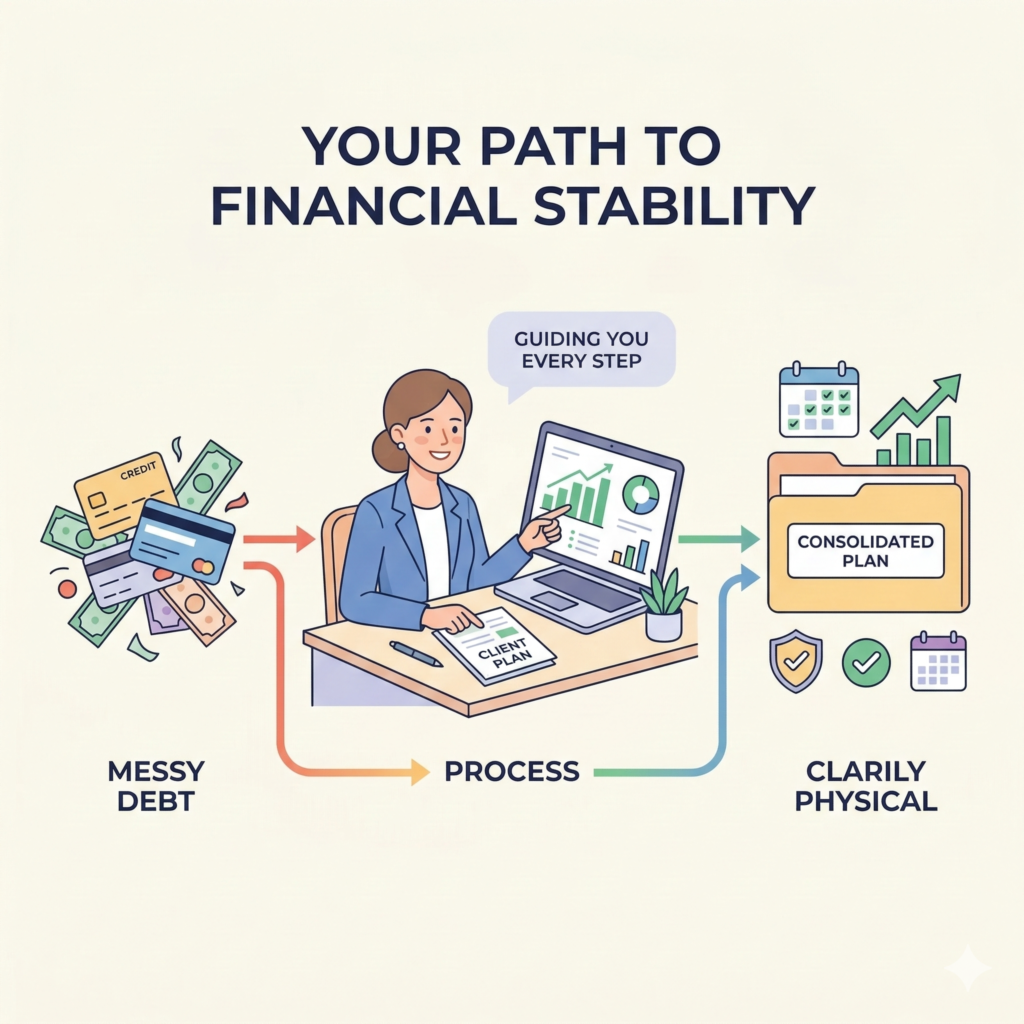
These solutions are designed to help simplify monthly payments, reduce interest rates, and create a structured plan to pay off credit card debt faster. With the right approach, it’s possible to regain control of your finances and work toward becoming debt-free.
Understanding your options is the first and most important step. Whether you are dealing with a single high-balance credit card or multiple accounts, a personalized debt relief strategy can help you reduce financial stress and move forward with confidence. At Pacific Debt Consolidation, we help individuals throughout the USA explore effective solutions for credit card debt. Our focus is on providing clear guidance, honest support, and realistic options to help you reduce debt and rebuild financial stability. If credit card debt is holding you back, now is the time to take action. Exploring your debt relief options today can put you on the path toward financial freedom and long-term peace of mind.
Credit Card Debt FAQ
There isn’t a number to assign to the answer of this question – but rather it is a matter of how you are managing your debt level, the amounts you are paying off each month, and whether you have been using credit cards for extravagances and unnecessary experiences that are truly beyond your means. If you’re paying only the minimum monthly payments, that’s a sign that you’ve got too much credit card debt and insufficient amounts of disposable cash to pay off what is often high interest rate (12-20% or higher) credit card debt. If you’re using one card to pay off another card (exclusive of low-interest rate balance transfer promotions), that’s another sign that you’ve got too much credit card debt. If you’re buying things on credit that you cannot afford to purchase for cash, that’s another sign that you’ve got a bad credit card spending habit in place and have too much credit card debt. Other signs that you have too much credit card debt include when you are denied additional credit when you apply, and when your card(s) “don’t work” at the point of purchase – because the credit lines associated with them are already close to “maxed out.”
Unpaid or delinquent credit card debt will fall off a credit report after seven years – but this does not extinguish the debt liability itself. Only the debtor’s particular state statute of limitations as it pertains to credit card debt can restrict the creditor (or collection agency) from pursuing debt collection after a sufficient period of time elapses. However, statute of limitations on credit card debt collection will vary considerably from state to state, the seven year mark is only relevant when it comes to unpaid debt no longer appearing on a credit report. State statutes of limitations related to credit card debt collection are often shorter than seven years (they typically range from three to six years), but are occasionally as long as ten years.
Negative consequences result almost immediately following a missed credit card payment. Late fees, an increase in the required minimum monthly payment, followed by penalty APR after 60 days of missed payments – your interest rate can quickly go as high as 29.9%! Interest expense mounts, things get expensive in a hurry, and your credit card billing department will contact you with increasing frequency via phone, text and email. Your credit score gets impacted negatively as the three major credit bureaus (Experian, Equifax and TransUnion) are notified of your delinquency at the 30, 60, 90, 120 and 180-day hallmarks. After 180 days, your credit card issuer will charge-off your account (write it off as a loss) and sell it to a collections agency, who will begin their own steady pursuit of you and the debt. Meantime, since your debt is now over 180 days delinquent, your credit report will bear the stain for seven years, holding back your credit score further.
Credit Counseling is a wise option for those who need help getting back on track financially. A skilled, certified credit counselor from a reputable agency will conduct an initial 30-45 minute telephone interview related to your income, expenses and debt levels, before making a determination as to what may be the best solution for your specific financial situation. Common solutions including enrolling in a debt management plan, taking out a debt consolidation loan or pursuing debt settlement.
You may want to consider applying for a secured VISA credit card, one in which you deposit money into a savings account and the card is then used for purchases up to the amount of your deposit. This is an excellent way to begin the process of rebuilding your credit.
A credit card account from fifteen years ago is displayed on my credit report. Are accounts supposed to stay on my credit report for this long?
If you look closely at your credit report, you’ll likely find that credit card account activity from more than ten years ago actually reflects a positive item – namely that you paid your bills on time. Negative items – such as missed payments and late fees – will remain for seven years, while bankruptcies and judgments remain for ten years. If you discover negative items on your credit report that extend beyond these time frames, contact the credit reporting agency that issued the report and dispute the error.