
Bankruptcy
Bankruptcy is a legal procedure that allows individuals, businesses, and other organizations to discharge debts when they can no longer afford to pay them. The primary objective of bankruptcy is to provide those deep in debt with a fresh start, with the secondary function of paying off credito8rs as much as possible without severely burdening the debtor any further.
We are not attorneys, so if you are considering bankruptcy or need legal advice, please contact an attorney in your state.
Understanding Your Bankruptcy Options

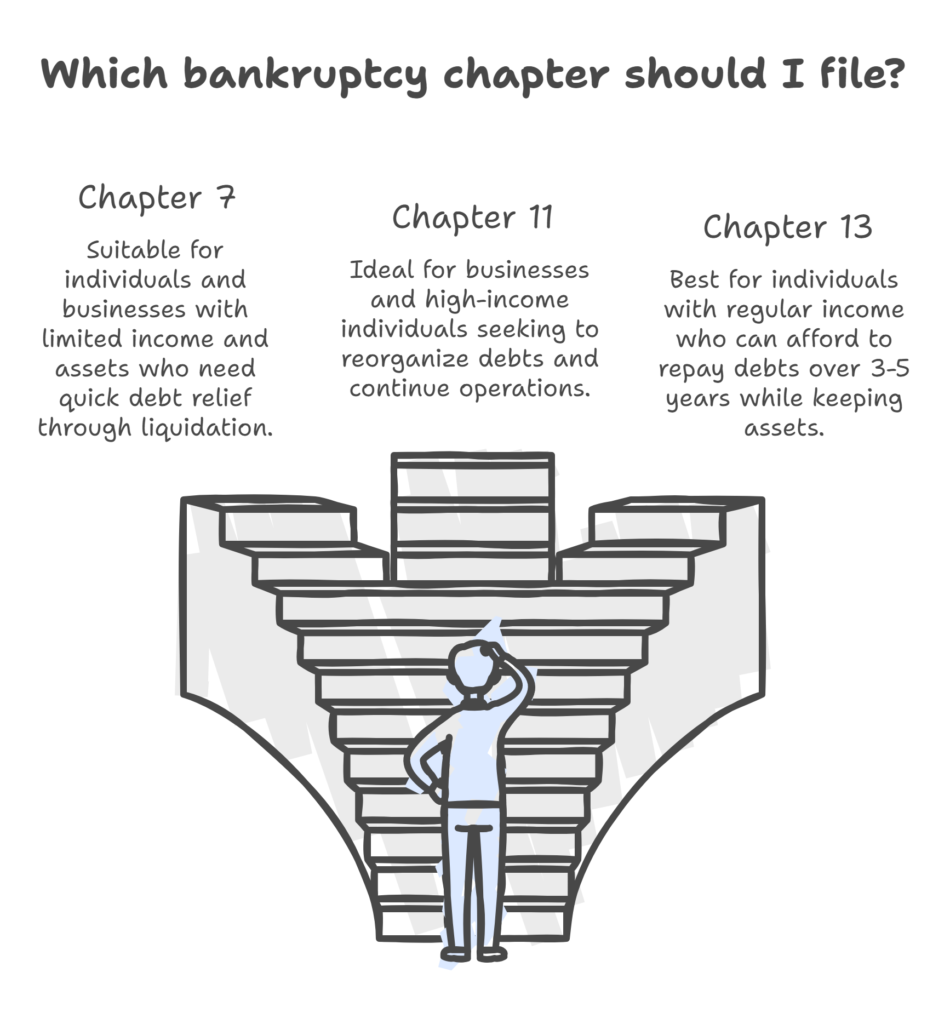
Chapter 7 Bankruptcy
A fast debt relief option that may eliminate eligible unsecured debts, often completed within a few months.

Chapter 11 Bankruptcy
A reorganization option often used by businesses or individuals with complex or high-value financial situations.

Chapter 13 Bankruptcy
A structured repayment plan that allows individuals with steady income to reorganize and repay debt over time.
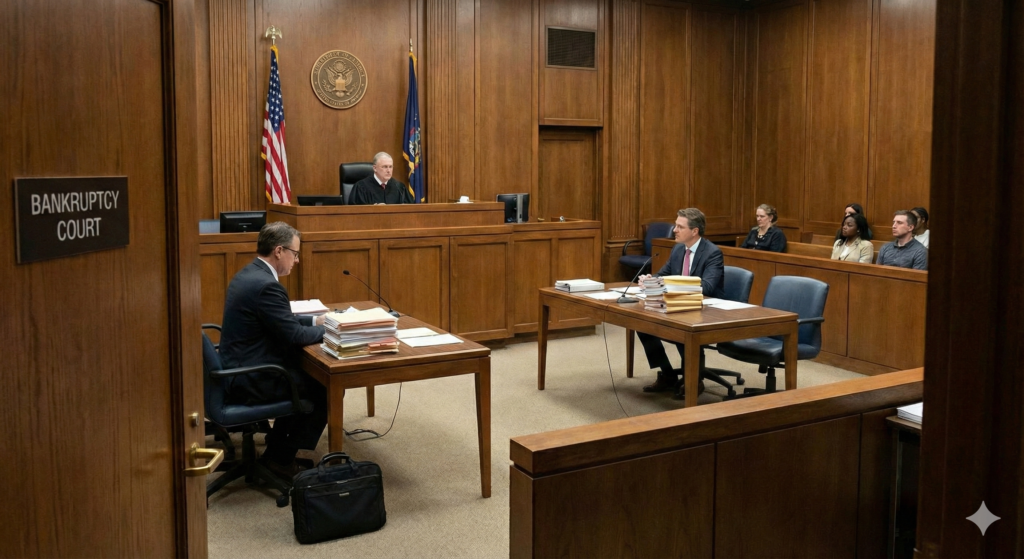
What is a bankruptcy court proceeding?
In a bankruptcy court proceeding, after examining the assets and liabilities of individuals and businesses who are functionally insolvent, a judge and court trustee determine whether to discharge debts. If the judge and trustee decide to discharge debts, the individual or business who filed for bankruptcy becomes relieved of the requirement to pay them off.
The Three Primary Forms of Bankruptcy
When debt becomes overwhelming, many people start exploring bankruptcy as a possible solution. Bankruptcy is a legal process designed to help individuals and businesses reset their finances when they can no longer meet their obligations. However, not all bankruptcies work the same way. In the United States, there are three primary forms of bankruptcy that consumers should understand: Chapter 7, Chapter 11, and Chapter 13.
Each option serves a different purpose depending on income, assets, and financial goals. Knowing the difference can help you make a more informed decision about your future.
Do I Need an Attorney to File Bankruptcy?
While it is technically possible to file bankruptcy without an attorney, doing so can be risky. Bankruptcy laws are complex, and filing incorrectly may result in delays, dismissal, or unintended loss of assets.
An experienced bankruptcy attorney helps ensure that paperwork is completed accurately, deadlines are met, and exemptions are properly applied. This guidance can be especially important in Chapter 13 cases, which involve repayment plans and court approval.

That said, bankruptcy is not always the first or best solution. At Pacific Debt Consolidation, we often encourage individuals to explore non-bankruptcy alternatives before taking this step. In many cases, debt consolidation or settlement may help address financial challenges without the legal and credit-related consequences associated with bankruptcy.

What Are the Consequences of Declaring Bankruptcy?
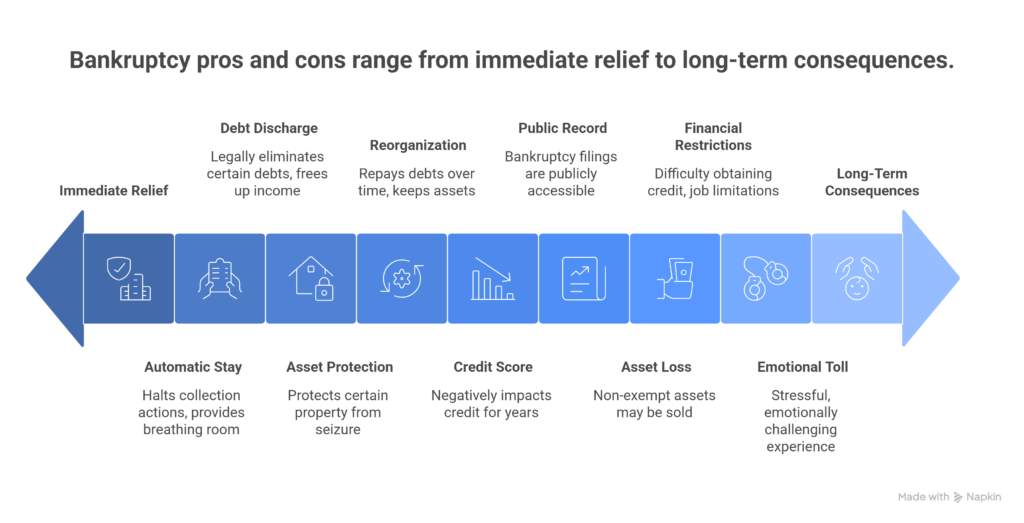
Bankruptcy can offer relief, but it also carries significant consequences that should be carefully considered. A bankruptcy filing remains on your credit report for several years, potentially affecting your ability to qualify for loans, housing, or favorable interest rates. Some assets may be at risk, depending on the type of bankruptcy and applicable exemptions.
Additionally, bankruptcy does not eliminate all types of debt. Obligations such as certain taxes, student loans, and child support are typically not dischargeable.
For these reasons, many individuals explore debt consolidation or settlement options before filing for bankruptcy. These alternatives may help reduce debt and regain control without the long-term impact on credit and financial flexibility.
What Happens Once I’ve Filed for Bankruptcy?
Once a bankruptcy case is filed, an automatic stay goes into effect. This legal protection temporarily stops most collection activities, including creditor calls, lawsuits, and wage garnishments. This can provide immediate relief for individuals under financial pressure.
After filing, a trustee is assigned to review the case. The trustee evaluates assets, income, and debts to ensure compliance with bankruptcy rules. In Chapter 7 cases, eligible debts may be discharged relatively quickly. In Chapter 13 cases, a repayment plan is proposed and reviewed by the court.
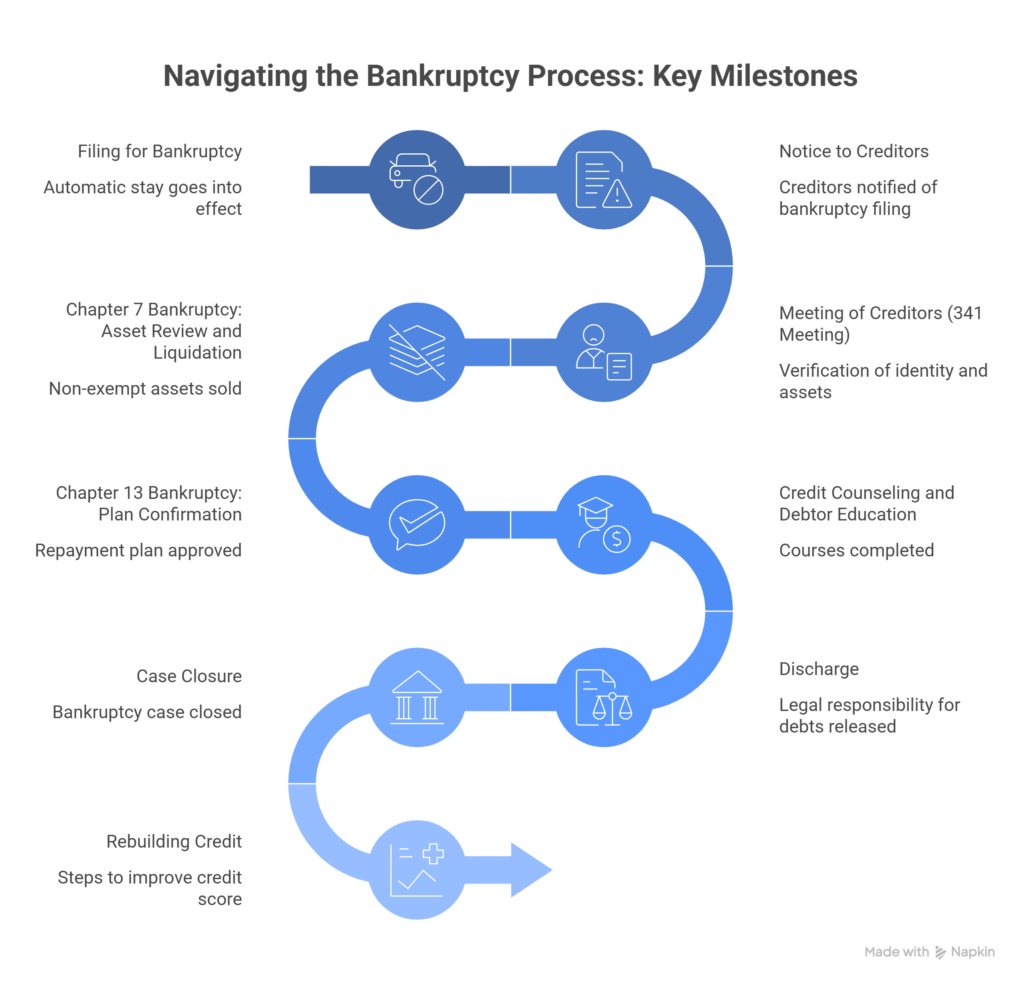
Throughout the process, certain financial disclosures and counseling requirements must be met. Once the case is completed and approved, eligible debts are discharged or resolved according to the court’s order.
Because bankruptcy is a legal proceeding with lasting implications, understanding what happens before filing is just as important as knowing what happens after.
Frequently Asked Questions About Bankruptcy
Many unsecured debts, such as credit cards and medical bills, may be discharged. However, some debts, including student loans and child support, are typically excluded.
Yes. Once you file, the automatic stay generally stops most collection efforts immediately.
Chapter 7 typically remains for up to 10 years, while Chapter 13 remains for up to 7 years.
This depends on the type of bankruptcy, your equity, and applicable exemptions. Chapter 13 may offer more flexibility in keeping assets.
No. Bankruptcy is a legal process, while debt consolidation is a financial strategy that combines debts into a manageable payment without court involvement.
Yes, but there are waiting periods and restrictions depending on previous filings.
No. Certain debts, such as taxes and student loans, may not be discharged.
Most employers cannot fire you solely for filing bankruptcy, but it may affect certain financial-related positions.
No. Many people qualify for alternatives such as debt consolidation or settlement, which may provide relief without filing bankruptcy.
Speaking with a financial professional can help you compare options and determine the best path based on your goals and situation.